

Achieve EAA Compliance
With European Accessibility Act (EAA) enforcement now underway, digital accessibility is a compliance priority for many organizations operating in the European Union (EU).
Download our Complete Guide to EAA Compliance for more information about the EAA, including:
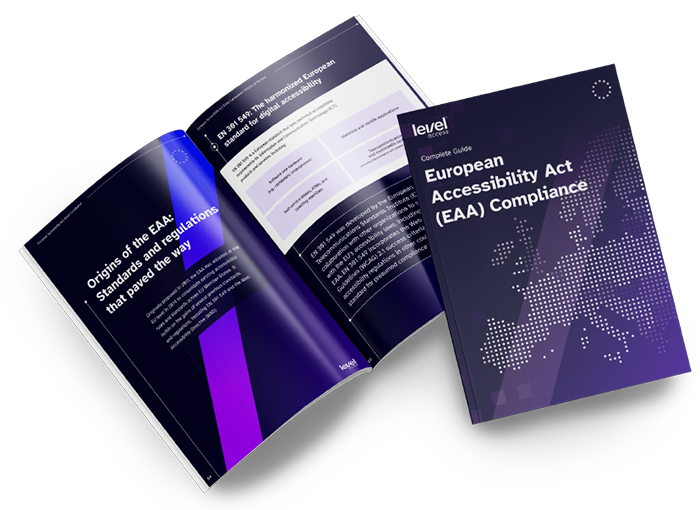
Download The Complete Guide to European Accessibility Act (EAA) Compliance
Trusted by the world’s leading brands



Overview of the EAA
The EAA mandates that many consumer products and services offered within the EU, including e-commerce, banking, and transportation, are accessible. To comply with the law, organizations must ensure that consumer-facing digital experiences—such as websites and mobile apps—related to covered products and services are usable for people with disabilities.
Regarding digital accessibility, the presumptive standard for EAA compliance is EN 301 549, the harmonized European standard. All 27 EU Member States were obligated to incorporate the EAA into their laws by 2023 and began enforcement in June 2025.
How does the EAA impact U.S. businesses?
The EAA applies to any organization that offers covered products and services to consumers in the EU—regardless of where that organization is based. That means U.S. businesses selling to European customers must comply with the law, or risk facing penalties.
The good news? If your organization is already compliant with U.S. laws like the Americans with Disabilities Act (ADA), you’re well on your way to EAA compliance—but there are additional requirements to consider. Learn more about the differences between the EAA and the ADA in our guide.
Does the EAA apply to your organization?
Many organizations that serve consumers in EU Member States are required to comply with the EAA. The law applies directly to any organization that provides consumers with covered products and services, including the following.
 E-commerce and online services
- Websites and mobile apps
- Other digital content and communications (including videos, documents, digital maps, and email)
 Banking services
- Websites and mobile apps
- Other digital content and communications (including videos, documents, digital maps, and email)
- Consumer banking services
- ATMs, point-of-sale devices, kiosks, and self-service transaction machines
- Contact information
 Computers and mobile devices
- Computers and mobile phones
- Communication and telephony equipment with computer capabilities
- Media equipment with computer capabilities
- E-readers
- Point-of-sale devices and self-service kiosks
 Shops and restaurants
- Point-of-sale devices
- Self-service technologies
- Kiosks
 Air travel and other passenger transport (excluding government-run transport)
- Websites and mobile apps
- Other digital content and communications (including videos, documents, digital maps, and email)
- Point-of-sale devices, kiosks, and self-service transaction machines
- Electronic tickets and electronic ticketing services
- Delivery of transport service information, including real-time travel information
 Media streaming and telephony
- Websites and mobile apps
- Other digital content and communications (including videos, documents, digital maps, and email)
- Communication and telephony equipment with computer capabilities
- Media equipment with computer capabilities
Recognized as a leader by G2




Understand your EAA compliance status
Understanding your current risk level is the first step toward compliance. Request a free risk assessment to:
Join 1,000+ organizations harnessing the market-leading digital accessibility solution.