

The State of Digital Accessibility in the Public Sector
More than one in four adult Americans lives with a disability, and U.S. public-sector organizations are under growing pressure to ensure their digital services are usable for every constituent. As the demand for efficient online services continues to rise, regulatory requirements are tightening, with new rulemaking under Title II of the Americans with Disabilities Act (ADA) taking effect in April 2027.
But delivering accessible experiences at scale can be challenging. Teams are balancing modernization goals and compliance deadlines with limited capacity and increasingly complex digital portfolios.
So, how is the U.S. public sector approaching digital accessibility? What are organizations’ top priorities, and what challenges are limiting progress?
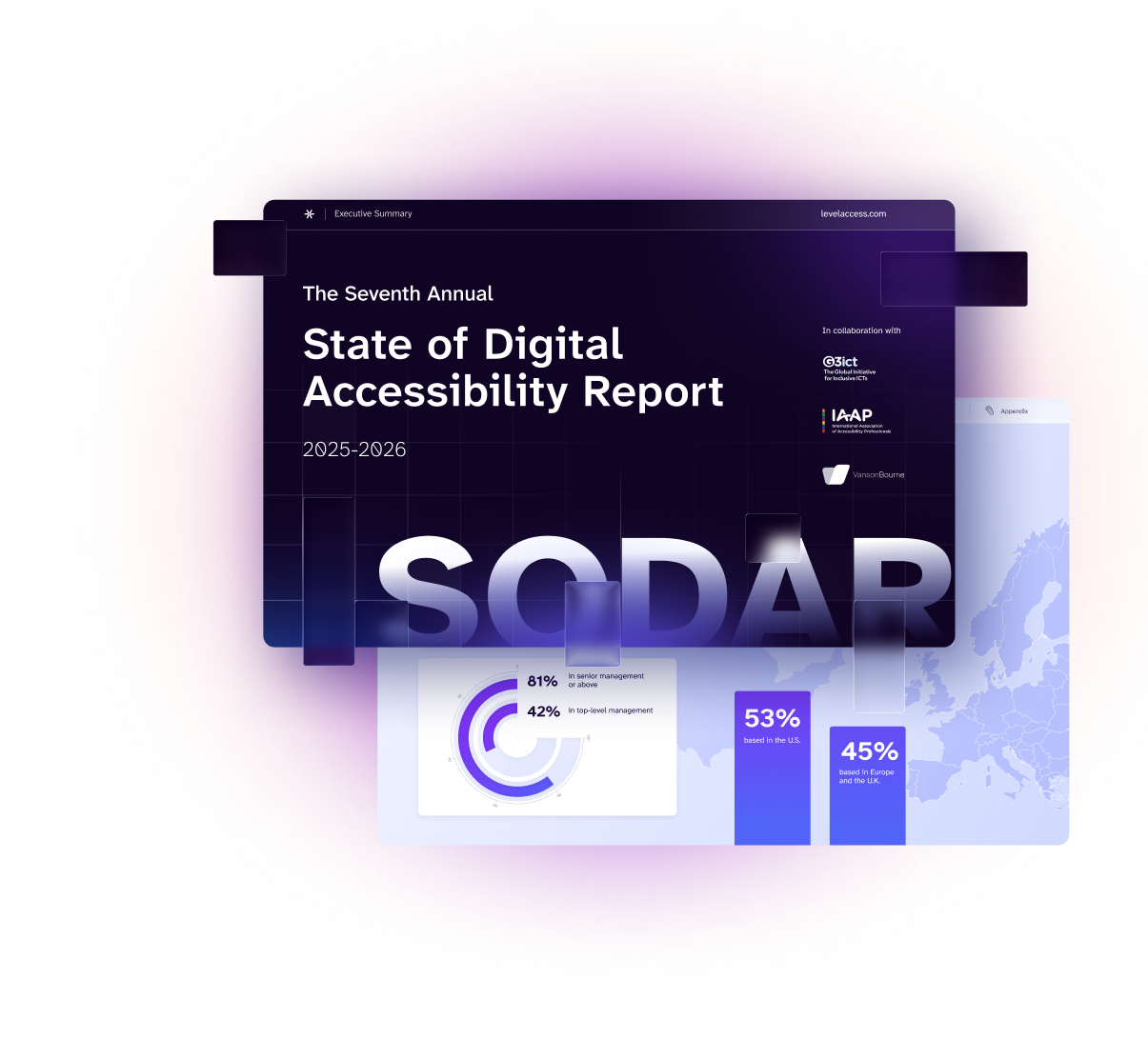
To inform our Seventh Annual State of Digital Accessibility Report, we surveyed professionals at organizations across the U.S. public sector—including federal, state, and local government agencies, as well as healthcare providers and education institutions. This resource captures our key findings.
Reduced risk, improved citizen experience
For public entities, accessibility is critical to mitigating legal risk, particularly with ADA Title II deadlines looming. But teams also recognize its wider impact, noting that accessibility improves the usability of digital resources and increases satisfaction among the communities they serve.
Digital accessibility strengthens compliance and streamlines public service delivery.
-
91%
of U.S. public-sector professionals agree that accessibility reduces legal risk.
-
86%
of U.S. public-sector professionals say accessibility improves user experience.
-
88%
of U.S. public-sector professionals say accessibility improves customer satisfaction.

Consistent, proactive adoption
U.S. public-sector teams are moving beyond one-off fixes and working to build accessibility into the full lifecycle of their digital services. Their focus is on expanding accessibility beyond websites, increasing organization-wide adoption, and integrating accessibility earlier in the creation of new digital experiences.
Public-sector organizations aim to scale their impact and build proactive accessibility practices.
-
43%
of U.S. public-sector professionals rank “ensuring digital accessibility across all digital asset types, beyond websites” among the top three priorities for their program.
-
43%
of U.S. public-sector professionals rank “increasing adoption of accessibility practices across the organization” as a top priority.
-
40%
of U.S. public-sector professionals rank “approaching accessibility more proactively when creating new digital experiences” as a top priority.
What’s holding public-sector teams back—and how to move forward
While U.S. public-sector teams understand the critical role of digital accessibility, many face structural pressures that limit progress. Competing priorities, limited capacity, and gaps in tools and support make it difficult to address issues consistently.
To reduce strain on time and resources, organizations can equip designers, developers, and content teams with tools that embed accessibility checks and guidance directly into their existing workflows.
Integrated tools, such as LevelDocs for document accessibility and Level CI for automated testing, make it easy for teams to approach accessibility as a standard part of their day-to-day responsibilities, rather than an added task.
A unified platform can also streamline testing, remediation, reporting, and vendor accessibility tracking across complex portfolios—supporting consistent, organization-wide progress.

Competing priorities and resource gaps limit programs’ success.
-
39%
of U.S. public-sector professionals rank “competing organizational priorities” among the top three challenges facing their program.
-
36%
of U.S. public-sector professionals cite “insufficient time to address issues” as a top challenge.
-
33%
of U.S. public-sector professionals cite “inadequate tools and services” as a top challenge.
Legal risks remain a significant concern for public-sector organizations.
Digital accessibility gaps may expose public entities to legal and regulatory risks. As compliance requirements tighten, accessibility gaps—whether in websites, documents, mobile apps, or vendor-provided systems—can lead to investigations, fines, penalties, and loss of public trust.
If your organization needs clarity on its obligations under digital accessibility laws—or how to meet them effectively—our experts can help. We’ll work with you to interpret relevant requirements and develop practical compliance plans. And if you’re already facing legal or regulatory action, we’ll review demand letters or complaints to support a strategic, defensible response.
70%
of U.S. public-sector professionals say their organization has been involved in legal or regulatory action related to digital accessibility in the past year.
32%
of U.S. public-sector professionals say their organization has received a digital accessibility lawsuit.
80%
of U.S. public-sector professionals believe their organization is at risk of legal action in the year ahead.
Training and proactivity are key drivers of progress.
U.S. public-sector professionals report that their most meaningful advances in digital inclusion come from educating their teams and embracing proactive practices—specifically, by involving people with disabilities in user research and testing for accessibility during development.
Building accessibility into digital experiences from the start is far more efficient—and far less risky— than relying on reactive remediation. Training reinforces this approach by giving teams the skills and confidence to integrate accessibility into their work early, preventing costly, time-consuming fixes to live experiences.
-
46%
of U.S. public-sector professionals cite “implementing accessibility training for employees” among the three most impactful actions they’ve taken to advance digital accessibility.
-
37%
rank “including people with disabilities in user research” among their three most impactful actions.
-
37%
agree that “testing for accessibility during development” is among their most impactful actions.
To sustain momentum, U.S. public-sector teams seek intelligent tools and expert support.
As they work to maintain momentum and expand their impact, U.S. public sector teams are engaging third-party experts for support. They’re also embracing the opportunities of AI, with good reason: AI-enabled tools can help reduce manual effort, making it easier for organizations to scale accessibility across complex digital portfolios. AI can also streamline prioritization, allowing teams to focus their effort on addressing the issues that have the biggest impact on their compliance risk and on users.
Considering leveraging AI in your accessibility strategy? Learn how our AI accessibility agents can help you find issues earlier, fix them faster, and prove progress.
43%
of U.S. public sector teams currently use accessibility consulting services.
64%
are incorporating AI tools into their accessibility strategies.
76%
say they consider AI capabilities when purchasing new accessibility tools.
Key takeaways for U.S. public-sector leaders
Public-sector organizations are advancing accessibility through more proactive practices, stronger internal capability, and the adoption of intelligent tools. Yet many still face legal risk, limited capacity, and gaps in process and technology.
To close these gaps and champion meaningful, actionable progress, U.S. public-sector leaders can take the following practical steps:
Shift from reactive fixes to proactive accessibility.
Accessibility is most efficient and cost-effective when it’s integrated across the experience creation process, through early testing, user-based research, and development-stage checks. This approach will reduce legal exposure, improve usability, and reduce late-stage remediation that puts pressure on tight public-sector budgets.
Embed accessibility into everyday workflows to ease pressure on limited resources.
Public-sector teams need accessibility to fit naturally into how they already work. Integrated tools—such as design plugins, SDKs, and document checkers—help designers, developers, and content authors address issues as they build. This reduces dependence on specialists and supports faster, more consistent progress.
Strengthen internal capability with practical, role-specific training.
Competing mandates and unclear ownership continue to slow programs down. Targeted, function-specific training gives teams the clarity and confidence to apply accessibility best practices in their daily work—helping leaders secure alignment, time, and resources across departments.
Serve every constituent with accessible digital experiences.
Level Access supports the delivery of modern, compliant, and user-centric digital services across the U.S. public sector. Our Hybrid Intelligence model brings together a unified platform, AI agents, and expert guidance, empowering organizations to build and scale sustainable, resilient accessibility programs.
Learn how we can help your agency reduce risk and ensure every member of the public can access the digital services they rely on.