

The State of Digital Accessibility in Retail
In retail, digital accessibility is both a legal imperative and a business advantage. But delivering inclusive, compliant experiences across all digital touchpoints can be complex.
So, how are retail organizations approaching digital accessibility? What actions are driving progress, and what risks remain?
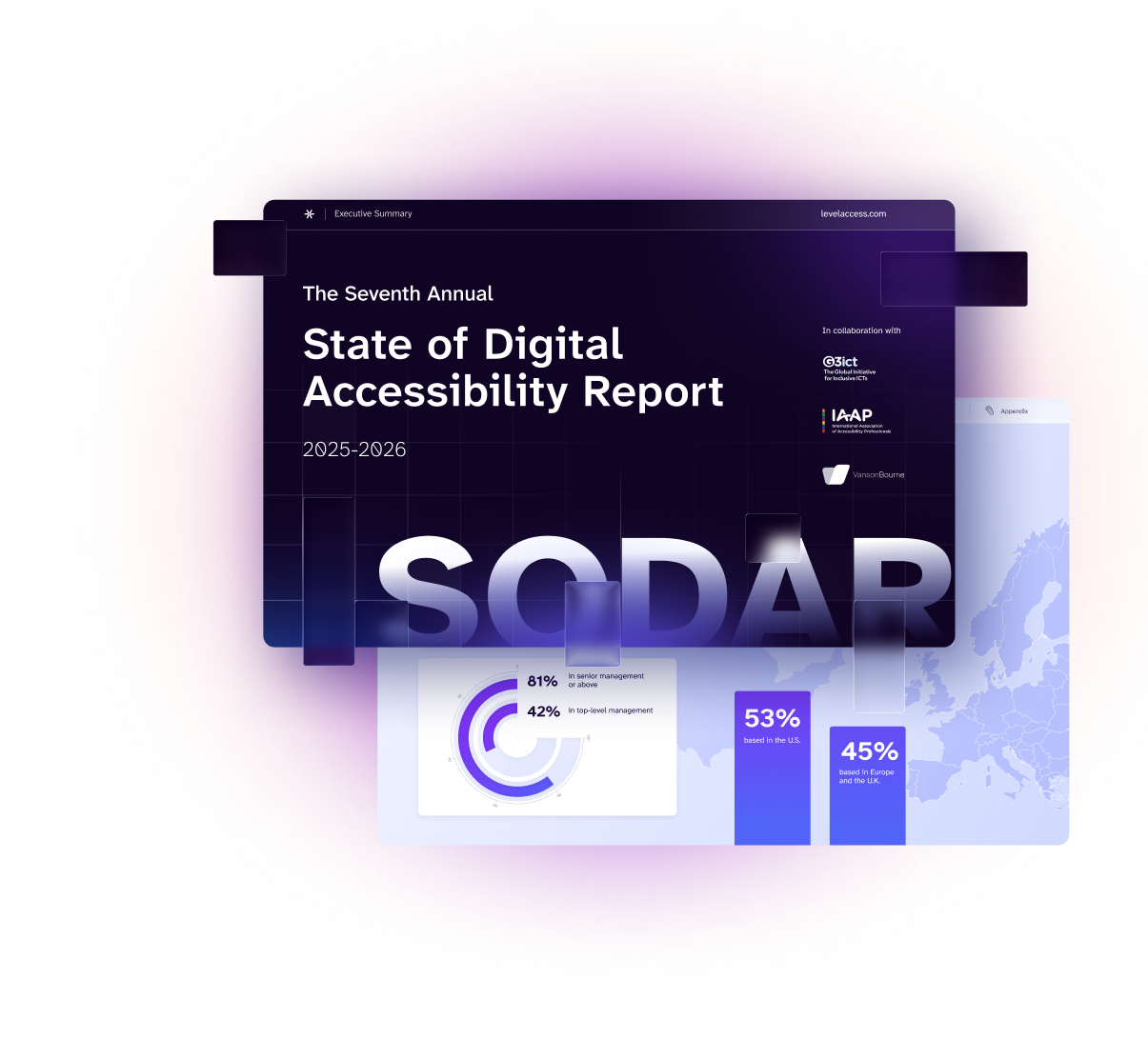
To inform our Seventh Annual State of Digital Accessibility Report, we surveyed retail professionals across the U.S. and Europe to better understand their approach. The following page highlights key insights from that research.
Beyond compliance, accessibility drives growth
Accessible experiences create stronger connections with customers.
Most retail professionals agree that digital accessibility is good for business. In fact, 88% consider it a competitive advantage, recognizing its positive influence on the metrics that matter most—from customer satisfaction to bottom-line revenue.
-
97%
of retail professionals say digital accessibility helps improve customer satisfaction.
-
94%
of retail professionals say it helps improve revenue.
-
88%
of retail professionals say it helps improve brand reputation.
-
79%
of retail professionals say it helps improve customer acquisition.
Scaling accessibility with AI and education
Retailers aim to scale adoption through knowledge-building and intelligent tools.
Teams increasingly recognize that accessibility is an organization-wide effort. As they look to scale compliance across teams and channels, many are using AI-powered tools and targeted training to embed accessibility into everyday work.
Curious about harnessing AI in your program? Learn how Level Access’s AI-powered accessibility agents accelerate progress.
44%
of retail professionals say “increasing adoption of accessibility practices across the organization” is one of the top three priorities for their accessibility programs.
38%
of retail professionals say “building internal accessibility knowledge and expertise” is one of their top three priorities.
35%
of retail professionals say “using AI to automate and scale accessibility processes” is one of their top three priorities.
What’s holding retail back and how to move forward
Retail professionals struggle to advance accessibility without organization-wide alignment on its value.
While retailers are motivated to expand their accessibility programs, teams find their progress limited by time constraints and conflicting priorities. These may stem from another common challenge: lack of alignment on the value of digital accessibility.
Unless their businesses are currently under pressure from lawsuits or customers, it can be difficult for accessibility champions in retail to persuade leaders to continue investing in digital inclusion. And without backing from other stakeholders, especially executives, accessibility efforts may be deprioritized in favor of other initiatives, leaving programs under-resourced and teams pressed for time.
To secure cross-functional and executive buy-in, retail teams need to connect accessibility efforts to outcomes that matter to leaders—stronger customer engagement, smoother shopping experiences, and confidence in compliance. Reporting tools, like those in the Level Access Platform, can give retail professionals the data they need to make a strong business case.
39%
of retail professionals cite “competing organizational priorities” as a top challenge.
34%
cite “insufficient time to address accessibility issues” as a top challenge.
31%
cite “lack of alignment on the value of digital accessibility” as a top challenge.
Legal risks remain widespread in retail.
What happens if retailers ignore accessibility? Digital accessibility gaps don’t just lead to lost revenue and poor customer experience—they can also expose retailers to compliance risk. The industry continues to be a frequent target for lawsuits and demand letters under the Americans with Disabilities Act, and regulatory pressure in Europe is mounting with enforcement of the European Accessibility Act (EAA) underway.
If you’re unsure about your legal obligations—or how to meet them—our experts can help. We’ll clarify requirements, outline a practical compliance plan, and, if you’re already facing legal action, review your demand letter or lawsuit and help you craft a strategic response.
66%
of retail professionals say their organization was involved in legal or regulatory action related to digital accessibility in the past year.
64%
believe they’re at risk of legal or regulatory action in the year ahead.
For lasting compliance, retailers seek smarter tools and expert support.
As they work to mitigate risk and maximize business value, teams are looking for solutions that combine AI, a unified platform, and expert guidance. The goal: to simplify compliance, speed up remediation, and deliver inclusive digital experiences at scale.
-
96%
of retail professionals say they consider AI capabilities when purchasing new accessibility tools.
-
38%
rank accessibility consulting services among the top new or additional tools / services they would prioritize investing in.
-
32%
rank a digital accessibility platform among the top new or additional tools / services they would prioritize investing in.
Key takeaways for retail leaders
The data is clear: accessibility drives revenue, strengthens customer relationships, and reduces legal exposure. To turn these insights into meaningful progress, retail leaders can take several practical steps:
1. Elevate accessibility as a business driver—not just a compliance task.
Regularly report on program impact, connecting progress to outcomes like customer satisfaction, brand reputation, and revenue to build stronger executive alignment.
2. Scale adoption through training and embedded tools.
Make it easier for teams to incorporate accessibility into their day-to-day work by equipping them with practical training, along with tools that fit naturally into existing workflows.
3. Reduce legal exposure through continuous monitoring and proactive processes.
Stay ahead of risk by using monitoring tools to continuously track conformance, while working to proactively integrate accessibility into the experience creation process.
Deliver accessible experiences with a trusted partner.
As consumer expectations rise and legal scrutiny intensifies, accessibility will become a core differentiator for retail brands. Retail organizations need intelligent technology, practical training, and expert guidance to stay competitive as legal action persists, and consumer expectations rise.
Level Access meets retailers’ needs with an integrated platform, AI-powered tools, and expert support to help teams embed accessibility across every digital touchpoint.
Connect with us to learn how Level Access can help you deliver inclusive, customer-focused, and high-performing digital experiences. And to learn more about the evolving digital accessibility landscape, access the full State of Digital Accessibility Report.