


The Eighth
Annual State of Digital Accessibility Report

Annual report: 2026-2027
More than 2,500 digital experience professionals shared how their digital accessibility programs are evolving in the age of AI. Explore the report for data-backed insight on what’s working, what’s not, and what opportunities remain.
Key findings from
this year’s research
AI rewards mature programs 3x
as likely to say AI helps them work proactively when reporting from a mature program
U.S. legal risk continues to climb 72%
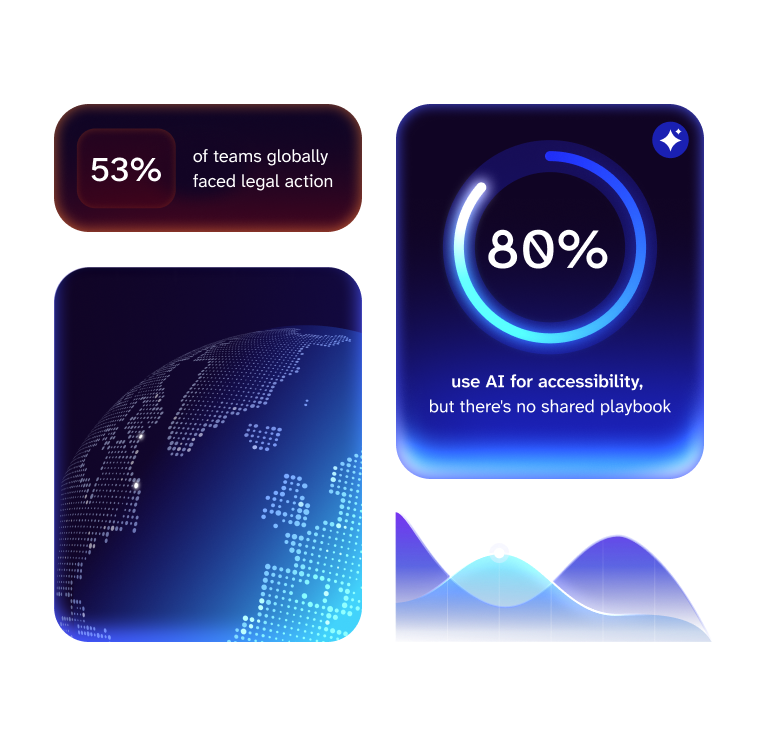
of U.S. teams reported accessibility-related legal action this year, up from 53% in 2025.
Executive support appears reactive 62%
say leaders are highly supportive, but 72% of those with highly supportive leaders faced legal action.
AI amplifies a mature program. It does not substitute for one.
Four in five professionals already use AI for accessibility work. What separates programs now is what AI is being layered onto. Organizations with key markers of program readiness—governance, training, and proactive processes—are far more likely to say AI strengthened their programs than those without.
With frameworks in flux, legal and regulatory risk persists.
Despite shifting ADA Title II deadlines for the public sector, the U.S. legal landscape remains highly active, with more respondents reporting involvement in digital accessibility-related legal action this year.
Executive support is present, but it may be reactive.
Most professionals say leadership supports digital accessibility, but the majority of those with highly supportive leaders have faced legal or regulatory action—suggesting risk, rather than commitment, may be the catalyst for buy-in.
“As AI accelerates the creation of digital experiences, accessibility cannot be left to automation alone. The true measure of accessibility is the experience of people with disabilities, not the output of a tool. Organizations that succeed will use AI to scale their efforts while ensuring that human expertise and disability perspectives continue to guide decisions, validate outcomes, and shape inclusive experiences.”

Unlock the Eighth Annual State of Digital Accessibility Report
Access the full report to explore data and insights from more than 2,500 digital experience professionals across North America and Europe.
- How AI is reshaping accessibility programs
- Which industries face the most legal action
- The top challenge to accessibility progress
- What sets the most effective programs apart
Additional resources
The State of Digital Accessibility: Putting the Findings Into Practice
How can you apply lessons from the strongest programs to your 2027 strategy? Get answers from our experts in this webinar.
AI and Digital Accessibility in 2026: Where AI Helps and Where It Doesn’t
80% of teams now use AI for accessibility, but the payoff isn’t even. Learn what the data says about those who benefit most.
Four Digital Accessibility Trends to Watch in 2027
Our survey of 2,500+ professionals revealed what’s working for accessibility practices, and what isn’t. Explore the findings.